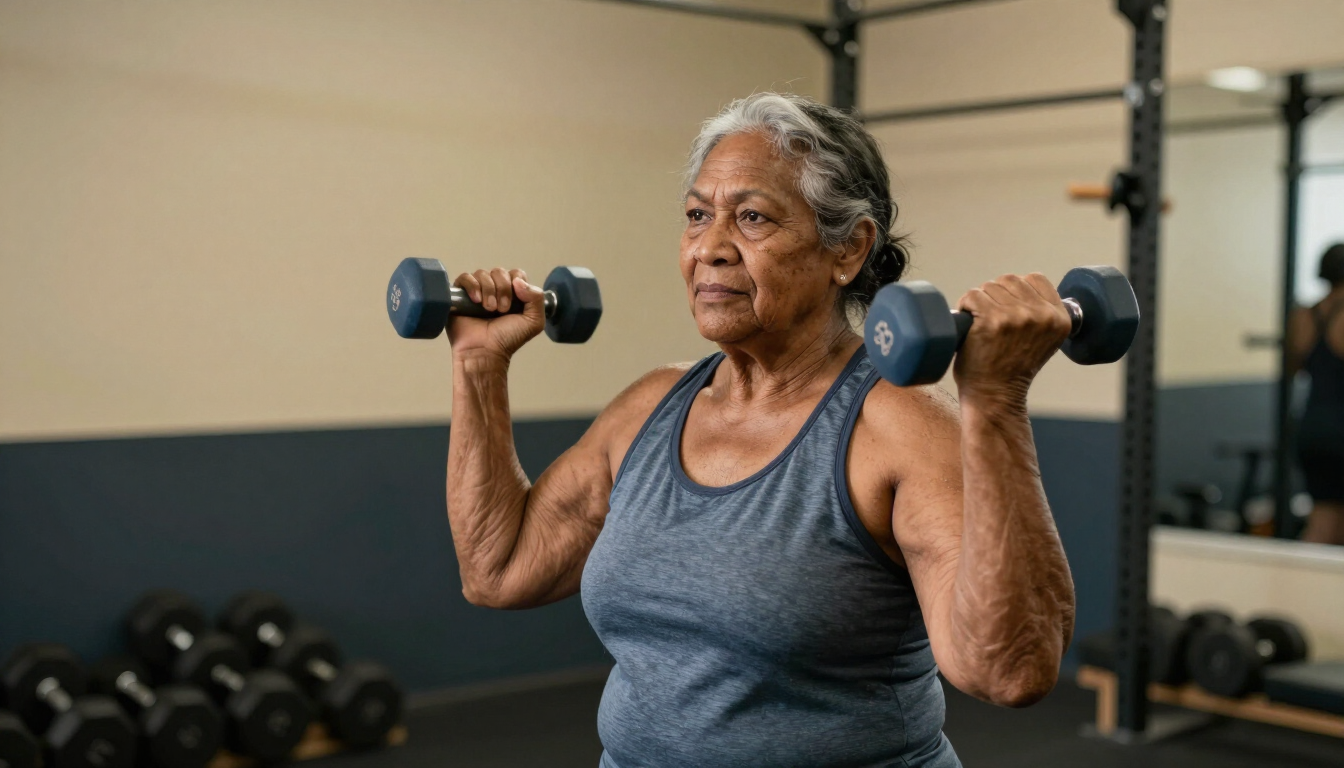
The Beginner's Case for Compound Lifts Over Isolation Exercises
Walk into any gym and you will see two broad kinds of exercise. Compound lifts, also called multi-joint exercises, work several muscle groups and joints at once, like squats, deadlifts, rows, and presses. Isolation exercises, also called single-joint exercises, target one muscle at a time, like biceps curls or leg extensions. Both have a place, but for most beginners, compound lifts make the best backbone of a routine.
Why compound lifts come first
Compound lifts let you train more muscle in less time, which matters when your time in the gym is limited. They also build coordinated strength that carries over to daily life, such as carrying groceries or getting up off the floor. The American College of Sports Medicine recommends both multi-joint and single-joint exercises, and it advises doing large-muscle, multi-joint exercises before single-joint ones in a workout. See its position stand on progression.
What the research says about isolation work
The evidence suggests isolation exercises are optional for building strength and size early on.
- In an 8-week study of trained men, adding single-joint exercises to a multi-joint program did not add further upper-body strength or size.
- In a study of untrained men, adding single-joint exercises gave no extra benefit in strength or performance, though arm circumference rose more in the group that added them.
These were short studies in small groups, so the picture is not final. The practical takeaway is that a program built on compound lifts is a time-efficient start, and isolation work can be added if you want extra arm or shoulder work.
The main compound lifts to learn
Most beginners can cover their whole body with five movement patterns. The exercise library explains each one.
- Squat, such as the goblet squat
- Hinge, such as the Romanian deadlift
- Push, such as the push-up, bench press, or overhead press
- Pull, such as the row, lat pulldown, or pull-up
- Carry or core, such as the farmer carry or plank
Learn them with light weights first. The form and technique guide shows what good form looks like.
How to order your workout
Do your compound lifts first, when you are freshest, and put any isolation work at the end. Here is a simple example:
- Goblet squat: 3 sets of 10
- Dumbbell bench press or push-up: 3 sets of 8 to 10
- Dumbbell row: 3 sets of 10 on each side
- Optional: biceps curl or lateral raise, 2 sets of 12
Where isolation exercises fit
Isolation exercises earn a place when you have a specific reason for them.
- You want extra work for a muscle, such as your arms or shoulders, once your foundation is solid.
- A compound lift shows a weak point, such as triceps limiting your press.
- A joint-friendly option helps when a compound lift bothers you. If a joint hurts, check with a professional.
They are not useless, but they should not crowd out the lifts that give you the most return for the time. For ready-made routines, see the workout plans, and for a first-month overview, the beginner's guide.
Keep reading
Safety note: This article is educational and is not a substitute for individualized medical or professional fitness advice. If you have a health condition or are unsure whether an exercise is right for you, please consult a qualified healthcare professional before you start.