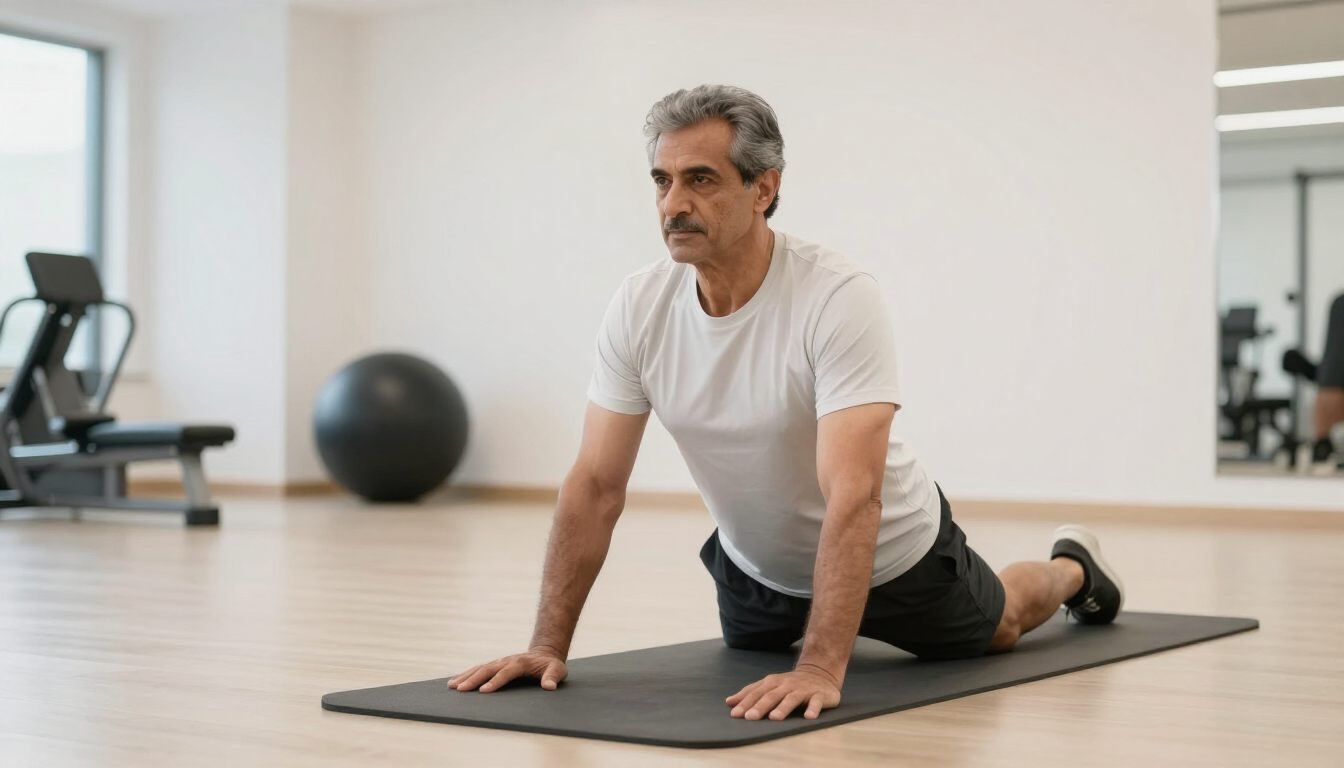
Home Workouts vs. the Gym: What's Actually Better When You're Starting Out
Home or gym is one of the most common questions people have before they start. The honest answer is that it depends less on which option is better in theory and more on which one you will keep doing. Both can build real strength. A large review of more than 30,000 participants, reported by Fit&Well, concluded that resistance bands, bodyweight exercises, and home routines can build strength and muscle, and found no major difference between machines and free weights. One of its authors summed it up this way: the best resistance training program is the one you will actually stick with.
What a gym offers
A gym gives you a wider range of equipment, room to keep adding weight for years, and the structure of going somewhere to train. Being around other people who are training can be motivating, and many gyms offer a free orientation. Heavier loads matter for one reason in particular. A 2017 meta-analysis found that muscle growth was similar across light and heavy loads when sets were taken close to failure, but maximal strength improved more with heavy loads. The downsides are the membership cost, travel time, and for some people the nerves of walking onto a busy floor. If that last one sounds familiar, read your first day at the gym.
What home training offers
Training at home removes travel time, membership fees, and the intimidation some beginners feel. With a few adjustable dumbbells, a bench, and some resistance bands, you can build real strength for a long time before you need more. The limits are the heaviest weight you can load, a smaller choice of equipment, and the distractions of home, such as chores and screens. The home workout guide has two full routines, and the equipment guide explains what to buy first.
How to decide
Let your actual life decide, not an ideal one.
- Choose home if a drive or a schedule would make you skip sessions, if gyms make you anxious, or if you want to start this week with very little spending.
- Choose a gym if you would be distracted at home, if you like having other people around, or if you want access to heavier weights and machines.
- Mix them if that suits you. Some people train at home most weeks and use a gym once a week for heavy lifts.
If you cannot decide, pick one and commit to four weeks. At the end, ask yourself whether you actually showed up. If you did, the choice was right.
How you will know you have outgrown a home setup
The sign is that your progress is limited by your equipment, not your effort. For example, your heaviest dumbbells no longer make a set of 8 to 12 reps feel hard, even with slower lowering and pauses. Before you move, try the fixes in the home workout guide, such as a heavier pair of dumbbells or a securely packed backpack. If you still need more, add a gym membership or a weekly day pass for the heavier lifts. Building a home gym on a budget covers how to do this gradually.
Either way, the principles are the same: learn the movements, add weight or reps gradually, and rest between sessions. See progressive overload explained and the workout plans. Either path builds strength, so pick the one you will repeat.
Keep reading
Safety note: This article is educational and is not a substitute for individualized medical or professional fitness advice. If you have a health condition or are unsure whether an exercise is right for you, please consult a qualified healthcare professional before you start.